
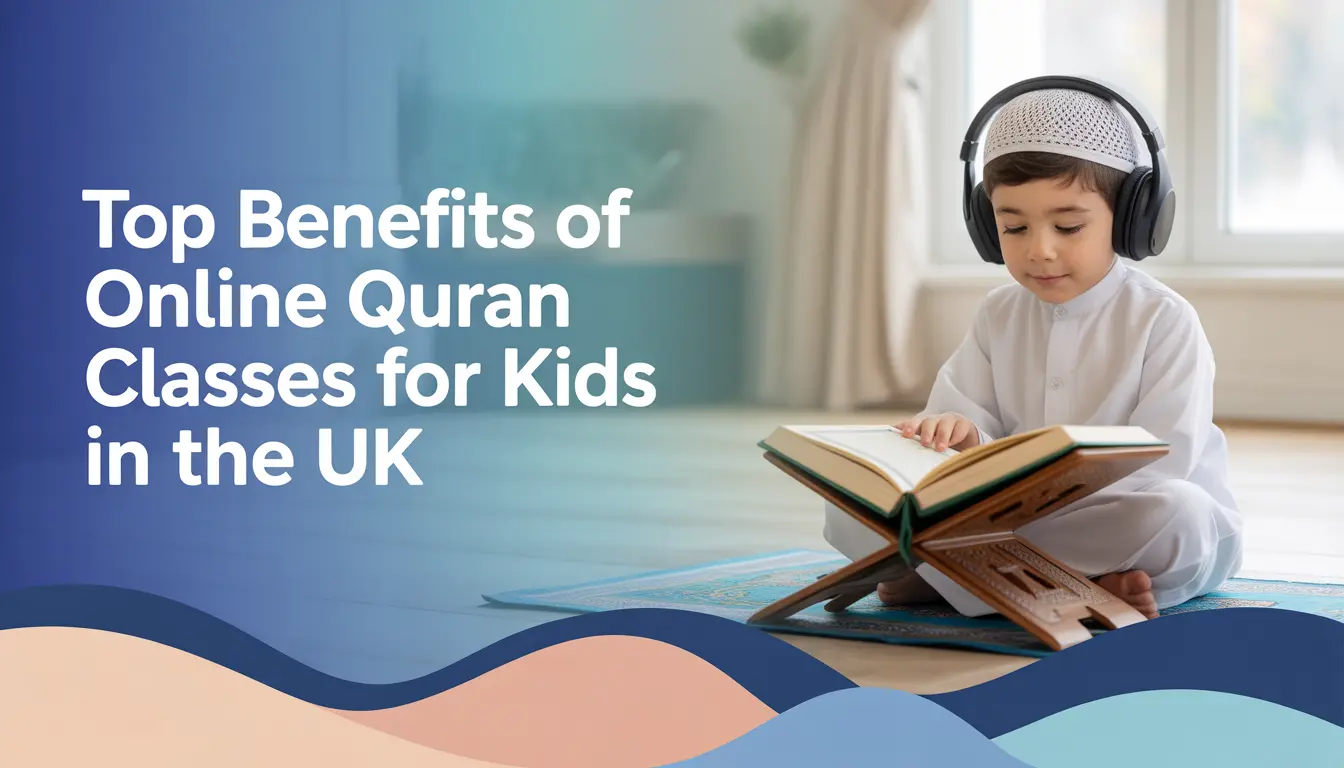
Muslim parents across the UK know the struggle. You want your kids learning Quran properly, but finding good teachers nearby? Nearly impossible in some areas. Then there’s the driving back and forth, the schedule conflicts, the overcrowded weekend madrasa classes. It’s a lot.
We’ve been running Online Quran Education for years now, and we keep hearing the same stories from families. Something has to give when you’re juggling the school run, homework and Islamic education. That’s the reality.
More families are going the online route now. Not because it’s trendy, but because it actually works for their situation. Here’s what we’ve noticed makes the biggest difference.
Scheduling That Doesn’t Make You Crazy
Your kids are in school all day. Then there’s homework, maybe football training or swimming lessons. Some parents work shifts. Trying to make a 5pm Thursday class at the local mosque? Good luck with that.
Online Quran classes for kids in the UK let you pick times that make sense for your family. We have students doing sessions at 7am before school starts. Others book evening slots at 8pm after dinner. Weekend mornings work well for families when nobody’s rushing anywhere.
The point is simple. When the schedule actually fits your life, kids show up consistently. Miss half your classes because of conflicts, and you’re not really learning much.
Teachers Can Actually Focus on Your Child
Think about a typical madrasa class. One teacher, maybe twenty children. Some get it right away, some need extra help, and the teacher is trying to keep everyone moving forward. It’s just how group classes work.
Most online Quran classes are one-to-one, or three students at most. Your child isn’t waiting their turn to get help. The teacher hears every single word they recite. Pronunciation gets corrected on the spot. If a verse is tricky, they go over it five times, ten times, however long it takes.
Parents tell us this is the biggest change. Their children were stuck at the same level for months in group classes. Two months of focused one-to-one sessions and suddenly they’re making real progress.
You can see how our online Quran classes for kids are structured, including course levels, teacher options and timings.
Getting Properly Qualified Teachers
Outside the larger cities, there often aren’t many qualified Quran teachers within reach. Maybe someone at the local mosque volunteers, but they haven’t been trained in Tajweed. Or they’re excellent with adults and less comfortable with children. You make it work, because what else can you do?
Learning online removes the geography problem entirely. We work with certified teachers who have studied the Quran for years, who hold Ijazah, who know how to work with children, and who speak fluent English so your kids understand everything clearly.
Whichever provider you choose, check credentials properly. Verify experience. Make sure they can teach, not just recite.
Your Child Learns at Home, Where You Can See Everything
As a parent, you want to know what’s happening in your child’s lessons. With online classes, they’re sitting right there at the kitchen table. You’re in the next room. You can hear the lesson. Pop your head in whenever you like.
No driving across town in rush hour. No stressed-out evenings trying to get there on time. Your child logs in, has their class, done.
Younger children especially do better when they’re comfortable. Learning from home removes a lot of anxiety from the whole process.
Learning Tajweed the Right Way
A lot of parents worry about this. How is a teacher going to catch pronunciation mistakes through a screen? Won’t something get missed?
It works better than you’d expect. The teacher hears everything clearly over a decent connection. They watch how your child’s mouth moves. They catch the small things straight away. “Bring your tongue further back.” “That sound needs to be shorter.”
Because it’s one-to-one, there’s time to really work on proper recitation. Compare that to a large class where the teacher might hear each student once in a forty-five minute session. Online gives far more actual practice and correction.
The Same Teacher Even If You Move
Families move. A new job, a house move, children changing schools. Every move used to mean finding new Quran classes, starting again with a different teacher and a different teaching style.
Learning online solves this. Move from Birmingham to Manchester, or from London out to the suburbs, and your child keeps the same teacher, the same time slot, the same routine. Nothing changes except your address.
We’ve had families continue with us through several house moves without their children missing a beat.
Not Breaking Your Budget Every Month
Private Quran tutors charge serious money, particularly in London and the bigger cities. Thirty or forty pounds an hour is not unusual. If you’ve got two or three children, do the maths. That’s a car payment every month just for Quran lessons.
Online classes cost considerably less, and most providers offer packages at different price points. You’re getting qualified teachers and structured lessons without paying premium local tutor rates.
You also save on petrol, wear on the car, and your own time driving around. Over a year, that adds up. It makes consistent Quran education something most families can actually sustain long term.
Children Building Confidence in Who They Are
Growing up Muslim in Britain isn’t always straightforward for children. They’re getting one message at home and seeing something different at school. Friends don’t always understand why they can’t do certain things. It can get confusing, especially for younger ones.
Regular Quran lessons give them something solid. They’re learning their faith. Understanding where these values come from. Talking with teachers who understand what it’s like to be a Muslim child growing up here.
That builds real confidence. Children stop feeling awkward about being Muslim and start feeling proud of it. That’s worth more than learning to recite properly.
Teaching Methods That Keep Children Interested
Today’s children are used to videos, games and interactive content. Sitting and listening to a lecture doesn’t work for most of them.
Good online Quran programmes understand this. They use screen sharing for visual aids. They break lessons into shorter chunks so children don’t switch off. They keep things moving.
We see children who used to dread Quran class getting genuinely keen about their lessons. When the teaching style matches how children actually learn, everything works better.
Parents Staying in the Loop
Learning online makes it easy to stay involved with your child’s progress. Sit in on a lesson. Read the progress reports teachers send. Message the teacher if you have questions.
When you’re connected to what’s happening, you can help your child practise between lessons. Celebrate when they memorise a new surah. Work on the tricky parts together. Children do better when they see their parents care about it.
What It Really Comes Down To
We’re not claiming online classes suit every family. Some children thrive in a traditional madrasa. Some communities have excellent local programmes, and that’s a real blessing.
But for a lot of British Muslim families, online Quran classes for kids solve genuine problems. Schedule flexibility. Qualified teachers you can’t find locally. Comfort and safety. Personal attention. Fees that don’t require remortgaging.
The best online Quran classes do more than teach recitation. They help your children connect with their faith, build their identity, and carry values that will guide them for life.
That’s what Online Quran Education is really about. Not ticking a box, but giving your children something meaningful that lasts.
See our online Quran classes for kids — 3 free trial classes
Explore More:
How to Keep Kids Engaged in Online Quran Classes in the UK
Why UK Parents Choose Online Quran Classes for Their Children
Best Online Quran Classes for Kids in the UK
Frequently Asked Questions
Do young children actually pay attention during online classes?
Most do. Good teachers know how to keep children engaged with interactive methods and shorter lesson segments. Being at home in a comfortable spot often helps young students focus better than a crowded classroom with plenty of distractions.
How do I know the teacher is actually qualified?
Ask directly. Serious providers verify that their teachers hold proper Ijazah certification and have teaching experience. Request a trial class to see how the teacher works with your child before you commit. If a provider won’t show you credentials or let you trial a lesson, treat that as a red flag.
What if my child is ill or we need to miss a class?
Most providers let you reschedule easily. Give some notice and move the lesson to a time that works. You don’t lose the session, you shift it. That flexibility is one of the main reasons families prefer online classes to fixed madrasa timetables.
What time are lessons available in UK time zones?
Because teachers work across several time zones, slots are available from early morning through to late evening UK time, including weekends. Most families settle on either a before-school or an after-dinner slot.